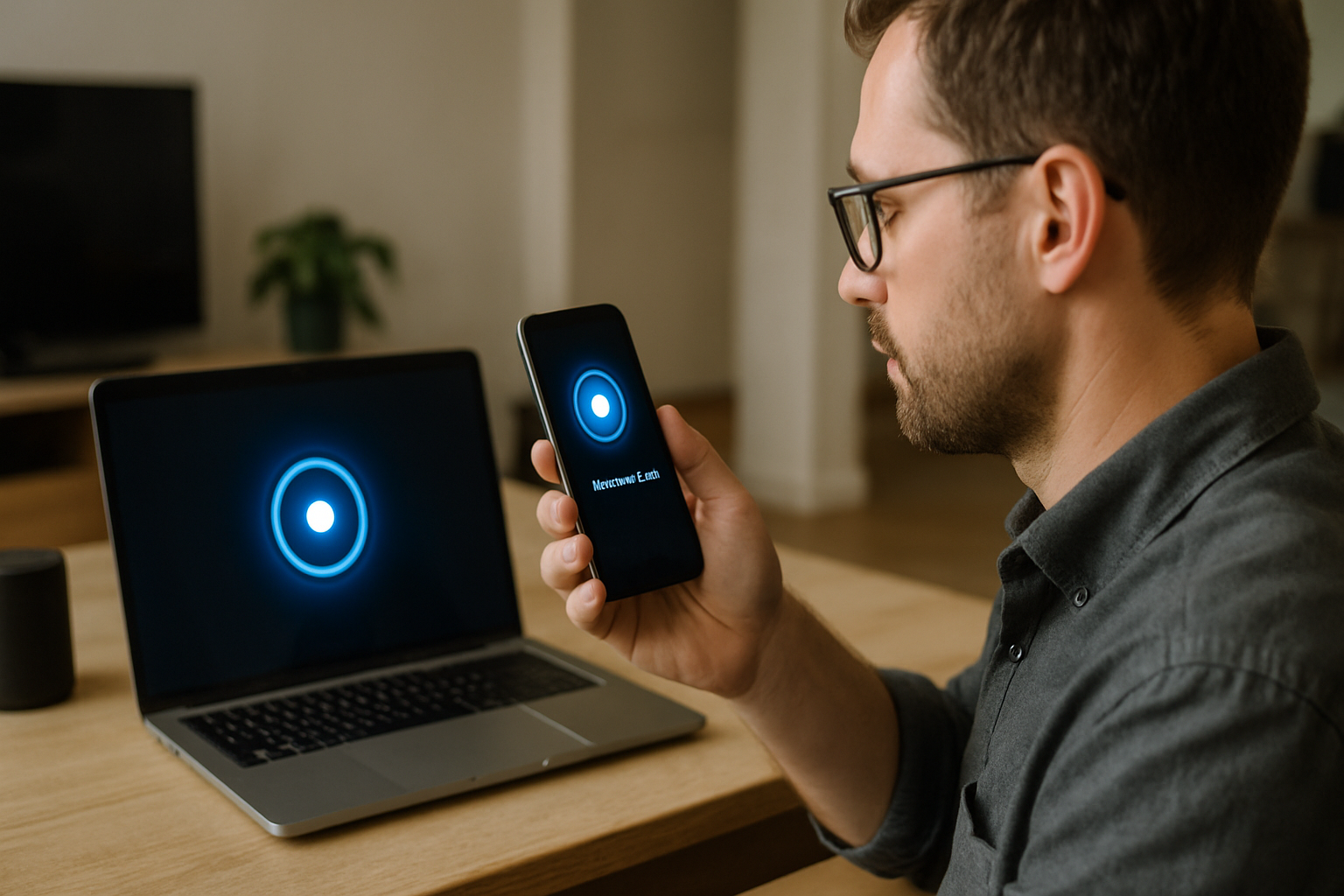
The New Wave of AI Assistants: Privacy, Versatility, and Industry Debates
The AI assistant market is increasingly focused on privacy, versatility, and user control, as major tech companies and startups adopt differing approaches, sparking debates within the scientific community and the industry.
The New Wave of AI Assistants: Privacy, Versatility, and Industry Debates
Privacy and User Control in the AI Assistant Market
Recent months have seen a shift in the development of AI-powered personal assistants, with increasing emphasis on user privacy, versatility, and control. While major tech companies like Google and TikTok continue to rely on cloud-based, integrated solutions, new startups such as Hark and Underdog are focusing on on-device AI models, ensuring that user data never leaves their own hardware https://techcrunch.com/2024/06/24/underdog-private-ai-assistant/, https://techcrunch.com/2024/06/24/hark-ai-personal-assistant/.
Underdog, for example, is a fully on-device AI assistant that encrypts user data and avoids sending it to external servers. According to developer Sigil Wen, smaller, locally run models are already capable of handling everyday tasks without forcing users to compromise on privacy. The business model is also different: Underdog is free and never ad-supported, instead taking a small percentage of payment transactions made via Stripe, thus aligning its incentives with users rather than advertisers https://techcrunch.com/2024/06/24/underdog-private-ai-assistant/.
Hark similarly aims to balance user experience and privacy. Its assistant can manage various aspects of a user's digital life—emails, calendar, files—while transparently showing how it navigates the web, building trust through visibility https://techcrunch.com/2024/06/24/hark-ai-personal-assistant/.
Versatility and Model Choice in AI Assistants
One of the biggest challenges for AI developers is choosing the right model: open-source, proprietary, or a combination of several. At TechCrunch Disrupt 2026, experts noted that more companies are using multiple models simultaneously to achieve optimal performance for different tasks. This flexibility affects not only product functionality but also operating costs and adaptability to market changes https://techcrunch.com/2024/06/24/open-or-closed-ai-learn-what-to-build-on-at-disrupt-2026/.
The decision to build a proprietary model, customize an open-source solution, or rent a closed API has long-term implications for product development and competitive advantage. Hardware is also increasingly important: AI model performance is closely tied to underlying chip and infrastructure development, and AI is beginning to play a role in optimizing its own hardware https://techcrunch.com/2024/06/24/open-or-closed-ai-learn-what-to-build-on-at-disrupt-2026/.
Balancing Privacy and User Experience
Major tech companies continue to offer integrated, cloud-based AI solutions. Google's new offline note-taking app, Foresight, runs entirely on the user's device and does not transmit data to the cloud, enhancing data security https://www.theverge.com/2024/6/24/24185813/google-ai-edge-foresight-offline-note-taking-app. Meanwhile, TikTok's new AI-powered shopping assistant and one-click checkout aim to streamline the user experience, keeping shoppers within the platform and boosting e-commerce activity https://techcrunch.com/2024/06/24/tiktok-ai-shopping-assistant-one-click-checkout/.
For Apple Intelligence, users face challenges in disabling AI features and freeing up storage, as macOS 27 no longer offers a simple toggle. An independent developer's command-line tool, RemoveMacAI, allows users to fully remove AI features and reclaim up to 30GB of storage https://www.theverge.com/2024/6/24/24185813/google-ai-edge-foresight-offline-note-taking-app.
Scientific and Ethical Debates Around AI Development
The emergence of AI models in the scientific community is also sparking debate. OpenAI, for instance, has produced AI-generated solutions to hundreds of longstanding mathematical problems, planning to release them on GitHub. Several leading mathematicians argue that this approach disregards traditional scientific publication processes and risks undermining proper attribution in the rush to outpace competitors https://www.wired.com/story/openai-mathematicians-millennium-prize/.
Industry debates extend beyond academia. The Center for Humane Technology, a leading advocate for online safety and AI risk mitigation, is undergoing significant layoffs and shifting to a more founder-led, direct communication strategy. The organization says the rapid evolution of AI requires a more focused approach https://www.wired.com/story/center-for-humane-technology-layoffs/.
The Future of AI Assistants: Flexibility, Privacy, and User Needs
The AI assistant market is increasingly defined by flexibility, privacy, and responsiveness to user needs. The differing approaches of startups and major corporations, along with ongoing scientific and ethical debates, highlight that the evolution of AI assistants raises not only technological but also societal and business questions. In the coming years, users are expected to gain more control over their data, while AI assistants become indispensable across more areas of daily life.
Sources
- https://techcrunch.com/2024/06/24/underdog-private-ai-assistant/
- https://techcrunch.com/2024/06/24/hark-ai-personal-assistant/
- https://techcrunch.com/2024/06/24/open-or-closed-ai-learn-what-to-build-on-at-disrupt-2026/
- https://www.theverge.com/2024/6/24/24185813/google-ai-edge-foresight-offline-note-taking-app
- https://techcrunch.com/2024/06/24/tiktok-ai-shopping-assistant-one-click-checkout/
- https://www.wired.com/story/openai-mathematicians-millennium-prize/
- https://www.wired.com/story/center-for-humane-technology-layoffs/